Press Releases
Slope Stability 2026: Data Gaps, Monitoring, and Uncertainty are the Biggest Challenges in Mining Slope Modeling
This integrated approach enables the optimization of drainage and depressurization plans, reduces uncertainty, and improves slope stability in mining operations.
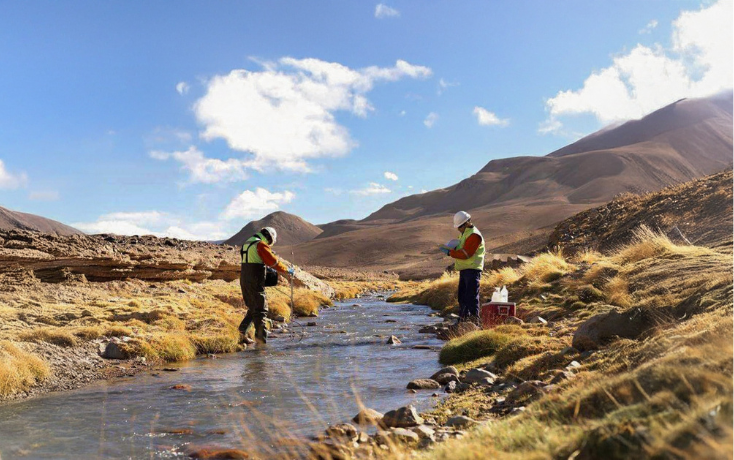
Lima, December 16, 2025. In a context where slope stability stands as a critical factor for the safety and sustainability of mining operations, the control and proper modeling of pore pressure remain one of the sector’s greatest technical challenges, said Alexia Carpentier, senior hydrogeologist and numerical modeler, during a webinar held as part of the Slope Stability 2026 congress.
According to Carpentier, one of the main challenges facing mining projects today is the lack of piezometric data in key areas, particularly where pit advancement limits instrumentation. In addition, the absence of post-implementation monitoring of drains or wells makes it difficult to assess the actual effectiveness of control measures.
“Another critical aspect is the need to anticipate the implementation of drainage and depressurization plans, properly accounting for drainage timeframes, as well as the limited incorporation of uncertainty in studies,” she explained.
Hydrogeological Challenges
During the webinar, Carpentier emphasized the importance of an integrated approach between hydrogeology and geotechnics, a practice that makes it possible to optimize drainage and depressurization plans, improving both their technical performance and cost efficiency.
“When both disciplines work together, a clearer understanding of groundwater behavior and its impact on slope stability is achieved,” the specialist noted.
Regarding the most effective numerical tools and methodologies, Carpentier emphasized that there is no single solution, but rather a combination of key factors: having sufficient monitoring data, developing a well-defined conceptual model, and incorporating uncertainty into numerical simulations.
“These elements enable a more realistic assessment of different operational and risk scenarios,” she said.
The pre–Slope Stability 2026 event provided a comprehensive overview of hydrogeological studies applied to pore pressure analysis and reinforced a key message for all attendees: the importance of incorporating uncertainty as a fundamental component of analysis and decision-making in complex mining projects.